Dynamic Bayesian Networks
 |  |  |
import pyagrum as gumimport pyagrum.lib.notebook as gnbimport pyagrum.lib.dynamicBN as gdynBuilding a 2TBN
Section titled “Building a 2TBN”Note the naming convention for a 2TBN : a variable with a name is present at t=0 with the name and at time t as .
## hard coded BN## twodbn=gum.BayesNet()## a0,b0,c0,at,bt,ct=[twodbn.add(gum.LabelizedVariable(s,s,6))#                   for s in ["a0","b0","c0","at","bt","ct"]]## d0,dt=[twodbn.add(gum.LabelizedVariable(s,s,3))#       for s in ["d0","dt"]]
## twodbn.addArc(a0,b0)
## twodbn.addArc(c0,d0)## twodbn.addArc(c0,at)
## twodbn.addArc(a0,at)## twodbn.addArc(a0,bt)## twodbn.addArc(a0,dt)## twodbn.addArc(b0,bt)## twodbn.addArc(c0,ct)## twodbn.addArc(d0,ct)## twodbn.addArc(d0,dt)
## twodbn.addArc(at,ct)## twodbn.generateCPTs()
## fast BN version
twodbn = gum.fastBN("d0[3]->ct<-at<-a0->b0->bt<-a0->dt[3]<-d0<-c0->ct;c0->at", 6)twodbnThe dbn above actually is a 2TBN and is not correctly shown as a BN. Using the naming convention, it can be shown as a 2TBN.
gdyn.showTimeSlices(twodbn)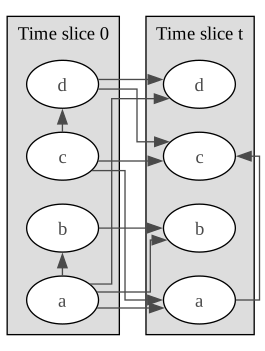
unrolling 2TBN
Section titled “unrolling 2TBN”A dBN is ‘unrolled’ using the 2TBN and the time period size. For a couple , in the 2TBN, the unrolled dBN will include
T = 5
dbn = gdyn.unroll2TBN(twodbn, T)gdyn.showTimeSlices(dbn, size="10")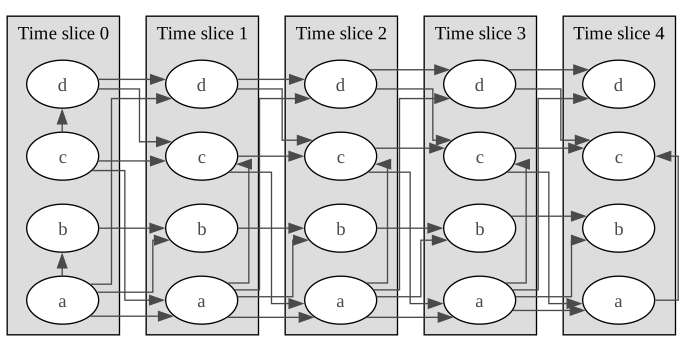
We can infer on bn just as on a normal bn. Following the naming convention in 2TBN, the variables in a dbN are named using the convention where is the number of their time slice.
gnb.flow.clear()for i in range(T): gnb.flow.add_html(gnb.getPosterior(dbn, target="d{}".format(i), evs={}), "$P(d{})$".format(i))gnb.flow.display()


dynamic inference : following variables
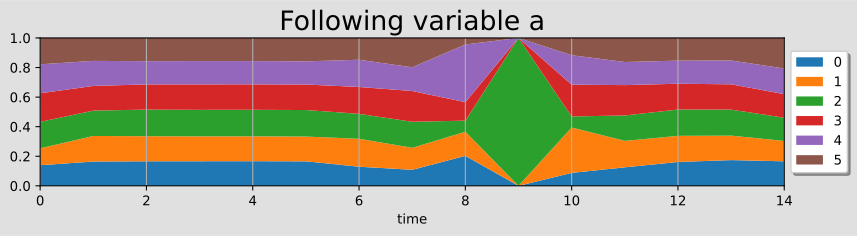
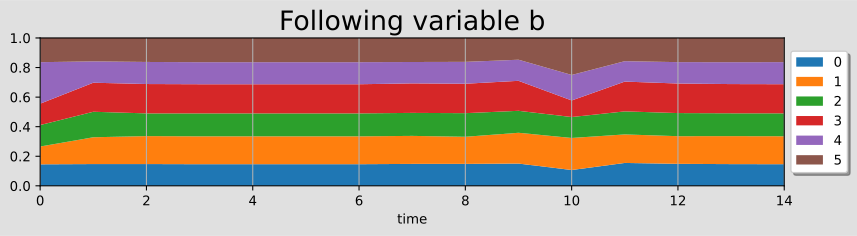
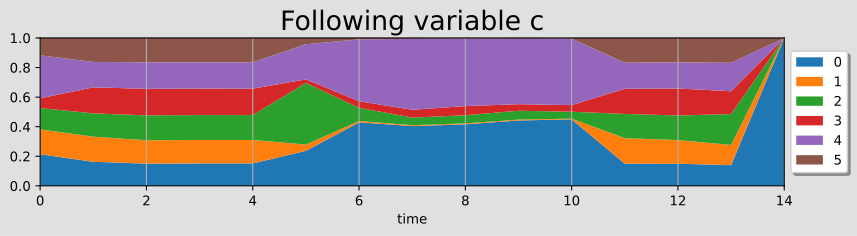
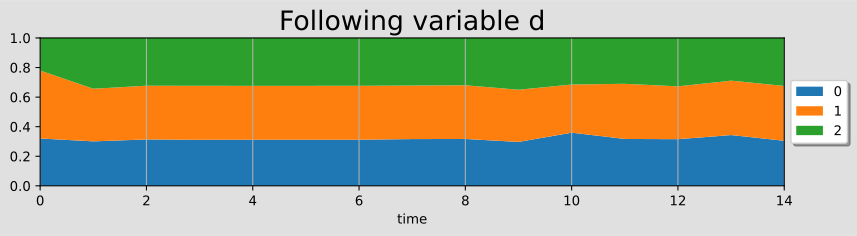
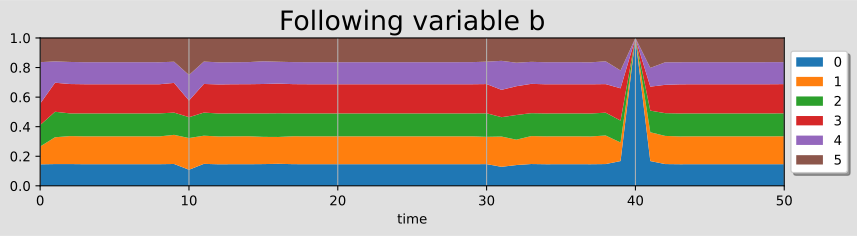
Section titled “dynamic inference : following variables”gdyn.plotFollow directly ask for the 2TBN, unroll it and add evidence evs. Then it shows the dynamic of variable for instance by plotting .
import matplotlib.pyplot as plt
plt.rcParams["figure.figsize"] = (10, 2)gdyn.plotFollow(["a", "b", "c", "d"], twodbn, T=51, evs={"a9": 2, "a30": 0, "c14": 0, "b40": 0, "c50": 3})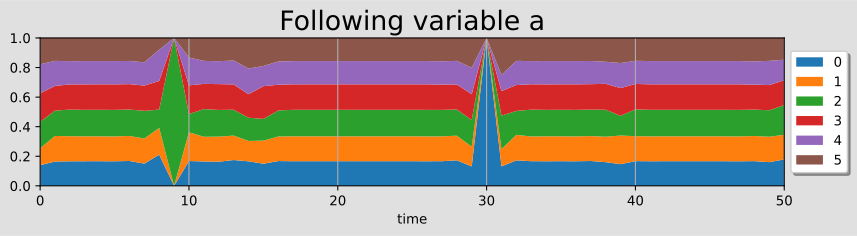
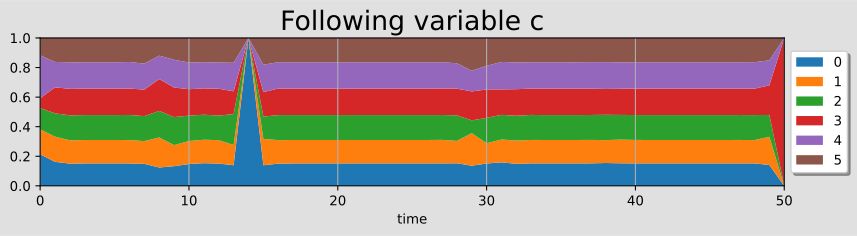
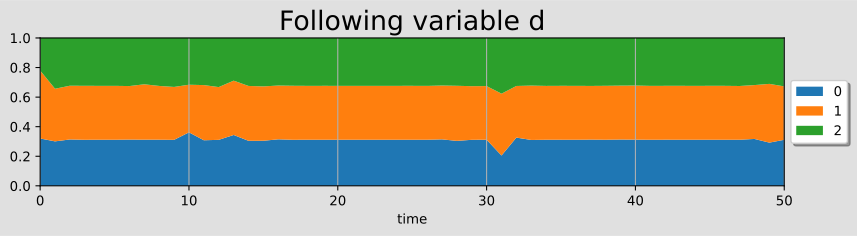
nsDBN (Non-Stationnary Dynamic Bayesian network)
Section titled “nsDBN (Non-Stationnary Dynamic Bayesian network)”T = 15
dbn = gdyn.unroll2TBN(twodbn, T)gdyn.showTimeSlices(dbn)
Non-stationnaty DBN allows to express that the dBN do not follow the same 2TBN during all steps. A unrolled dbn is a classical BayesNet and then can be changed as you want after unrolling.
##### new P(ct|c0)pot = gum.Tensor().add(twodbn["ct"]).add(twodbn["c0"])pot.fillWith([1, 0, 0, 0.1] * 9).normalizeAsCPT() # 36 valeurs normalized as CPT|
|
|
|
|
|
| |
|---|---|---|---|---|---|---|
| 0.4762 | 0.0000 | 0.0000 | 0.0476 | 0.4762 | 0.0000 | |
| 0.0000 | 0.0833 | 0.8333 | 0.0000 | 0.0000 | 0.0833 | |
| 0.4762 | 0.0000 | 0.0000 | 0.0476 | 0.4762 | 0.0000 | |
| 0.0000 | 0.0833 | 0.8333 | 0.0000 | 0.0000 | 0.0833 | |
| 0.4762 | 0.0000 | 0.0000 | 0.0476 | 0.4762 | 0.0000 | |
| 0.0000 | 0.0833 | 0.8333 | 0.0000 | 0.0000 | 0.0833 | |
## from steps 5 to 10, $C_t$ only depends on $C_{t-1}$ and follows this new CPTfor i in range(5, 11):  dbn.eraseArc(f"d{i - 1}", f"c{i}")  dbn.eraseArc(f"a{i}", f"c{i}")  dbn.cpt(f"c{i}").fillWith(pot, ["ct", "c0"])  # ct in pot <- first var of cpt, c0 in pot<-second var in cpt
gdyn.showTimeSlices(dbn, size="14")
plt.rcParams["figure.figsize"] = (10, 2)gdyn.plotFollowUnrolled(["a", "b", "c", "d"], dbn, T=15, evs={"a9": 2, "c14": 0})